Shower panels have become one of the most widely used solutions in modern bathroom design thanks to their ability to combine aesthetics, functionality, and ease of maintenance. Compared to traditional wall tiles, they offer continuous surfaces, fewer visible joints, and faster installation—features that are increasingly valued in both renovation projects and new builds.
In addition to improving the visual appearance of the space, shower wall panels help create cleaner, more uniform, and more contemporary environments, adapting to different decorative styles and technical requirements.
What are shower panels?
Shower panels are wall coverings specifically designed to line walls in wet areas, especially inside the shower. They are made from materials resistant to water, humidity, and daily wear, offering a durable and low-maintenance solution.
Unlike traditional tiles, panels create continuous surfaces with fewer joints, making cleaning easier and providing a greater sense of visual spaciousness.
Today, bathroom panels are available in a wide range of finishes, colors, and textures, allowing the creation of anything from minimalist spaces to warmer, more natural environments.
Advantages of shower panels over tiles
More and more bathroom projects are replacing traditional ceramic tiles with decorative panels due to their practical and aesthetic benefits.
Fewer joints and easier cleaning
One of the main advantages of shower panels is the reduction of visible joints. This not only improves the bathroom’s appearance but also makes daily cleaning easier and reduces the accumulation of moisture and dirt.
Visual continuity in the bathroom
Continuous surfaces help create more harmonious and visually spacious environments. This aesthetic continuity is especially important in modern bathrooms where a clean and balanced look is desired.
High resistance to humidity
Panels are designed to withstand constant exposure to water, temperature changes, and intensive daily use, maintaining their properties and finish over time.
Faster and more convenient renovation
Compared to other coverings, panels speed up installation times and reduce construction complexity, which is highly valued in private homes as well as hotel or contract projects.
Types of shower panels by finish
Choosing the right finish is essential to define the overall bathroom style. There are different options depending on the desired visual effect.
Stone or slate texture panels
Natural material-inspired textures are one of the most popular trends in contemporary bathrooms. They add visual depth and a more organic, elegant feel.
Smooth and minimalist panels
Uniform, continuous finishes are ideal for minimalist projects where clean lines and neutral tones dominate.
Custom panels
Some coverings allow full customization, incorporating images, graphics, or exclusive textures to create unique and distinctive spaces.
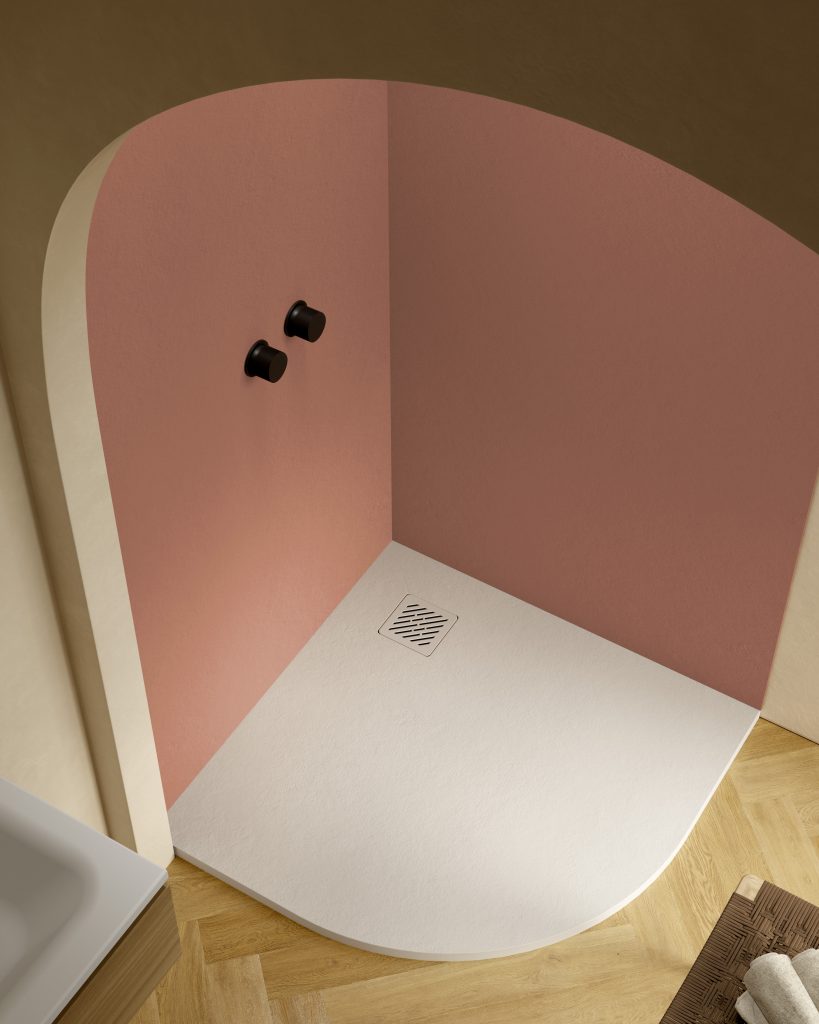
Continuity between wall and shower tray
Another growing trend is using the same finish for both the shower tray and the walls to enhance the feeling of visual integration and spaciousness.
Shower panel installation: speed and functionality
One of the most valued aspects of shower panels is their ease of installation. Thanks to their lightweight nature and flexibility, they are easier to handle and significantly reduce renovation times.
Depending on the chosen system, panels can be installed in different ways to suit each project’s needs.
Standard profile installation
This system allows panels to be joined similarly to traditional coverings, sealing joints with silicone to ensure waterproofing and durability in wet areas.
Hidden joint systems
Some more advanced systems feature tongue-and-groove joints that allow panels to be assembled more seamlessly and discreetly. This type of installation minimizes the visual impact of joints and promotes a much more continuous and clean aesthetic.
In addition to the visual result, these solutions improve the integration between panels and reinforce the sense of continuity in the bathroom.
Ideas for integrating shower panels in modern bathrooms
Decorative panels offer multiple possibilities in contemporary projects. Some of the most commonly used combinations today include:
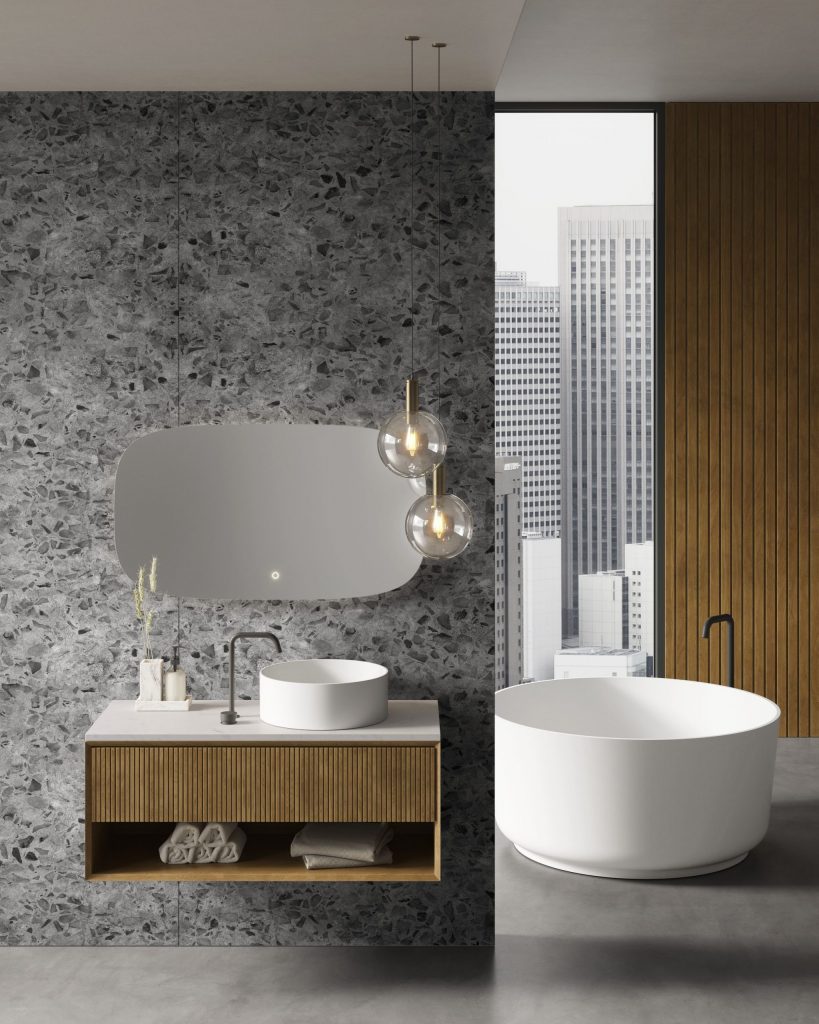
- Stone-effect finishes combined with natural wood furniture
- Neutral tones and continuous finishes to enhance visual spaciousness
- Matching finishes for both shower tray and walls
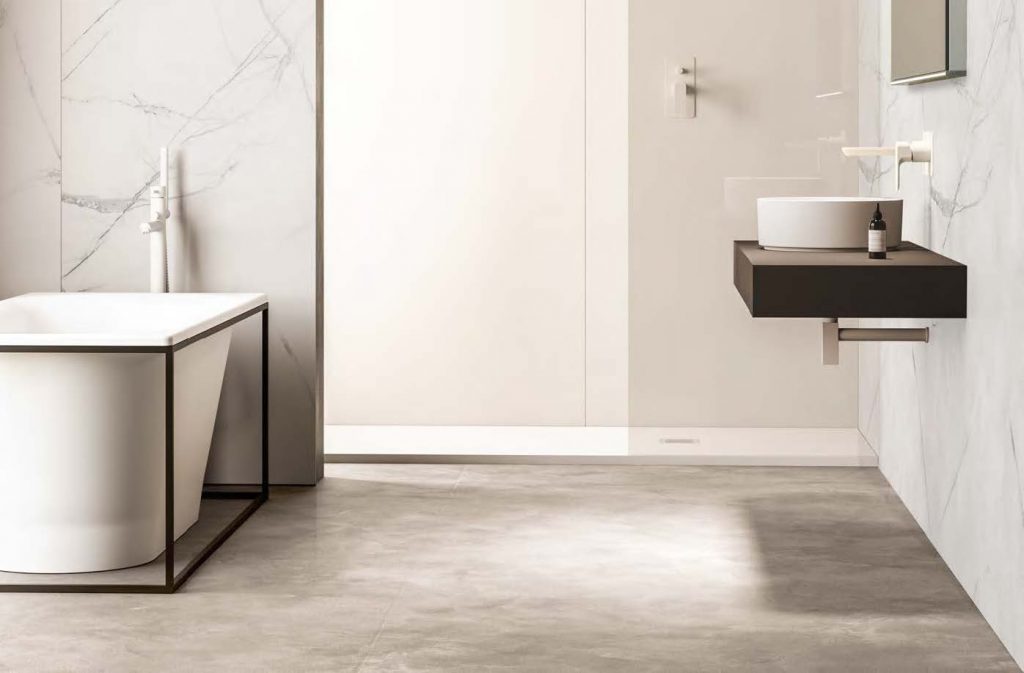
- Minimalist bathrooms with black fixtures and clean lines
- Spa-like spaces with indirect lighting and natural materials
This type of solution is especially relevant in modern residential bathrooms, hotels, and contract projects where design and functionality must be combined.
Shower panel solutions for current projects
Among today’s shower cladding solutions, there are proposals designed to combine resistance, aesthetics, and visual continuity.
Texpanel 2.0 panels allow the shower area to be clad using the same texture as the shower tray, creating a uniform and balanced finish. Available in textures such as Slate, Uniform, or Evolution, they offer high resistance to humidity, impact, and temperature changes.
On the other hand, solutions such as Creativeskin allow full customization of the cladding through exclusive designs, images, or distinctive finishes, offering greater creative freedom in interior design and high-end bathroom projects.
Shower panels: a growing trend
Shower panels represent an evolution in contemporary bathroom design. Beyond aesthetics, they offer important functional advantages such as easy cleaning, fast installation, and visual continuity.
Thanks to the variety of finishes, textures, and integration possibilities, they have become an increasingly in-demand alternative to traditional wall tiles, especially in projects aiming to create modern, functional, and durable spaces.